Business Concepts
Capital Expenditures: Capex vs Working Capital (2026)
Capital expenditures (capex) fund long-term assets while working capital covers daily bills. See the formulas, examples, and how to balance both in 2026.

Capital expenditures are the money a company spends to buy, upgrade, or maintain long-term physical assets: buildings, machinery, vehicles, and equipment. Unlike a monthly software bill, a capital expenditure sits on the balance sheet for years and gets expensed slowly through depreciation instead of all at once.
Quick answer
Capital expenditures (capex) are funds a business spends to acquire, upgrade, or extend the life of fixed assets like property, equipment, and technology infrastructure. Capex is capitalized on the balance sheet and depreciated over the asset's useful life, unlike operating expenses, which are deducted in the year they occur.
Key takeaways
- Capital expenditures buy or upgrade long-term assets; operating expenses cover day-to-day running costs.
- Capex shows up on the cash flow statement under investing activities, not the income statement.
- Working capital, not capex, funds daily operations, and the two compete for the same cash.
- Capital recovery measures how long it takes an asset to pay for itself through depreciation or resale.
- Poor capex timing against working capital needs is a common cause of cash crunches.
What Is Capital Expenditures?
Capital expenditures, often shortened to capex, cover purchases that create value beyond the current accounting period. A delivery company buying trucks, a factory installing new machinery, or a SaaS company building a data center all count as capex.
The defining test is time. If the asset will be used for more than one year, accounting rules require you to capitalize the cost and depreciate it, rather than expense it immediately. That is what separates capex from a routine operating expense like payroll or rent.
Most companies also set a capitalization policy threshold, commonly $2,500 to $5,000 under the IRS de minimis safe harbor election, below which a purchase is expensed immediately even if it will last for years. That threshold keeps the accounting team from tracking a laptop stand as a fixed asset.
If you are new to the vocabulary, capex is one entry in a wider glossary of core business concepts every operator eventually needs, alongside terms like gross margin and cash flow.
A quick disambiguation helps too, since search engines lump unrelated "capital" queries together. A capital one payment is simply paying down a Capital One credit card bill, a personal task with nothing to do with corporate capex. Village Capital and Investment is a specific impact-investing firm, not a generic financial term.
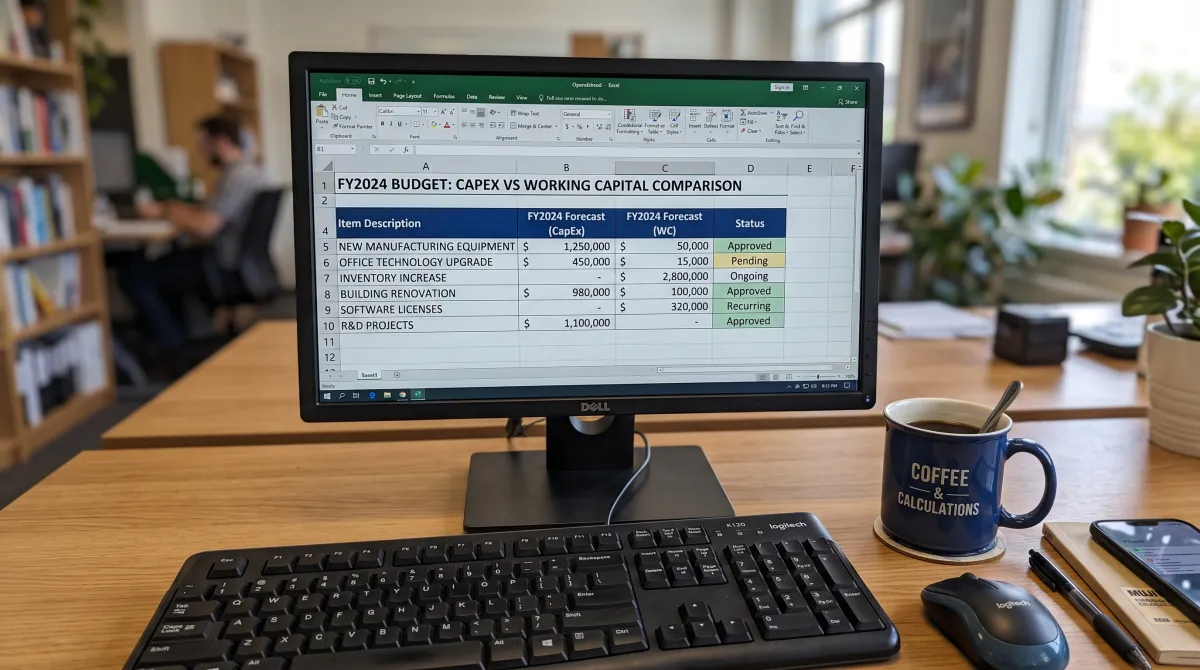
Capital Expenditures Explained
The simplest capex formula pulls straight from the financial statements: capex equals the change in property, plant, and equipment plus the current period's depreciation. Analysts use it when a company does not break out capex directly on its cash flow statement.
Capex is easy to confuse with working capital, but they solve different problems. The working capital definition is simple: current assets minus current liabilities, and the working capital formula produces exactly that number, the cash cushion available for the next twelve months of bills.
Put simply, capex builds the machine and working capital keeps it running. In practice, the working capital meaning boils down to one question: can the business pay its near-term bills without emergency borrowing?
Capital resources is the broader umbrella both terms sit under: the total pool of capital assets, cash, and credit lines a business can draw on to fund growth. Capital assets themselves include the equipment, buildings, and land that capex purchases create.
How a company pays for that capex depends on its capital structure, the mix of debt and equity funding the business relies on. A heavily leveraged capital structure funds capex with loans; a conservative one funds it from retained earnings.
On the balance sheet, contributions tied to capex financing often flow through a capital account, the ledger entry tracking owner or shareholder equity contributions and withdrawals over time.
Capital recovery is the payback side of the equation: how long it takes an asset to return its cost through cash flow, cost savings, or resale value. IRS Publication 946 assigns most computers and office equipment to the 5-year MACRS depreciation class, letting a business recover the asset's cost over that period instead of expensing it upfront.
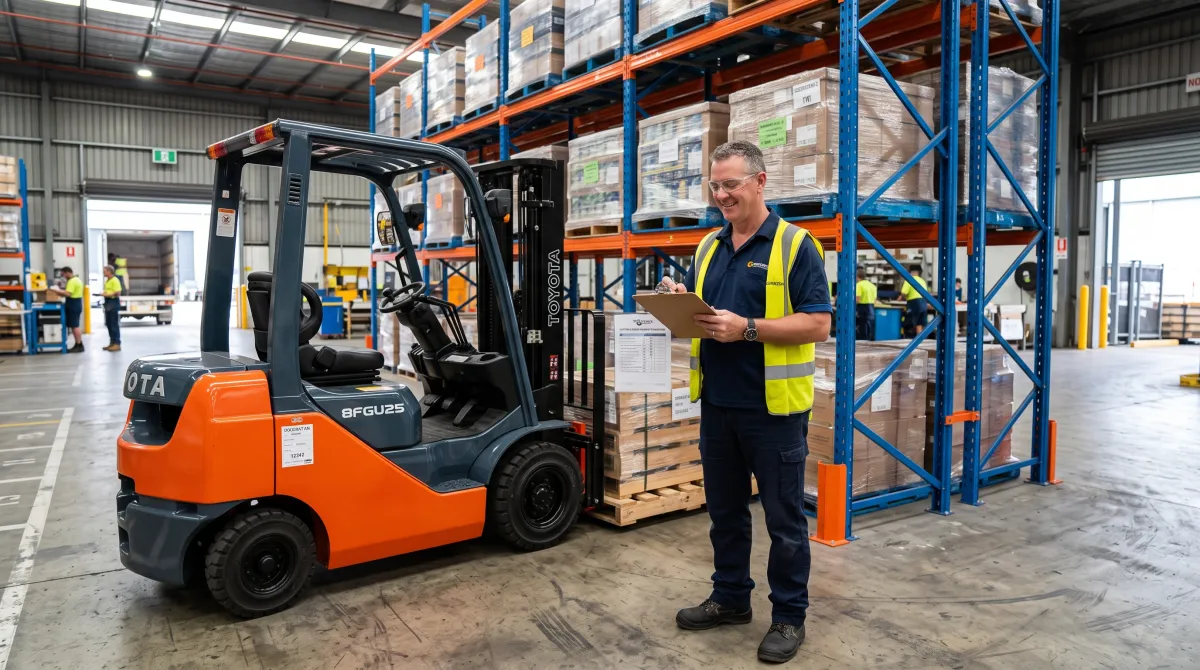
Capital Expenditures Examples
Capex looks different by industry, but the accounting logic stays the same: money spent now on an asset that earns its keep over years.
| Industry | Typical capex | Useful life |
|---|---|---|
| Manufacturing | Production machinery, factory expansion | 10-20 years |
| Logistics | Delivery trucks, warehouse automation | 5-10 years |
| Software/SaaS | Servers, data center buildout | 3-5 years |
| Retail | Store buildouts, point-of-sale systems | 5-10 years |
| Real estate | Building purchase, major renovation | 27.5-39 years |
That real estate range is not arbitrary. The IRS depreciates nonresidential real property over a fixed 39-year straight-line schedule, while residential rental property depreciates over 27.5 years, under its MACRS capital recovery rules.
Small businesses without cash reserves for a large purchase often finance capex externally. A lender such as Capital on Tap issues a business credit line specifically so owners can spread an equipment purchase over months instead of paying it upfront.
Capex buys the asset. Working capital buys the time to make that asset pay for itself.
How to Apply Capital Expenditures
Start by forecasting capex against your existing working capital strategies, not in isolation. A $200,000 equipment purchase looks affordable on paper until it drains the cash reserve your payroll depends on next month.
Calculate the capital recovery period before you commit. Divide the asset's cost by its expected annual cash benefit to estimate how many years until it breaks even, then compare that to the asset's useful life.
Match the funding source to the asset's life span. A building suits long-term debt or equity; a laptop fleet suits a revolving credit line or short lease instead.
Keep working capital as the constraint that governs timing, the same balance sheet logic covered in how reintermediation reshapes gross margin and working capital for platform businesses.
Equipment bought to chase a trend without a clear payback plan is one of the quiet budget mistakes that leaves a team set up to fail months later.
Capex aimed at new capabilities, not just replacement, carries a different risk profile. Weigh it against the benefits and risks of innovation before approving a project built on unproven technology.
Capital Expenditures FAQ
What is working capital?
Working capital is current assets minus current liabilities. It measures the cash a business has available to cover short-term obligations like payroll, rent, and supplier bills.
What are examples of working capital?
Working capital examples include cash on hand, unpaid customer invoices, and inventory sitting in a warehouse, minus short-term debts like accounts payable and any credit line balance due within a year.
How do you improve working capital?
You improve working capital by collecting receivables faster, negotiating longer payment terms with suppliers, trimming excess inventory, and delaying non-essential capex until cash flow stabilizes.
Why is working capital important?
Working capital is important because it determines whether a business can pay its bills on time. A company can be profitable on paper and still fail if it runs out of working capital.
How does working capital work?
Working capital works as a rolling buffer: cash comes in from sales and receivables, then goes out to cover short-term liabilities. A positive balance means the business can fund operations without emergency borrowing.