Business Concepts
Business Owners Policy (BOP): What It Covers in 2026
A business owners policy (BOP) bundles liability, property, and lost income coverage into one policy. See what's included, what's not, and how to apply in 2026.

If you searched business owners policy bop hoping for a plain-English answer, here it is. A business owner's policy, or BOP, bundles the coverage most small businesses need, property, liability, and lost income, into one policy instead of three separate bills.
I've helped small business owners shop for a BOP dozens of times, from a two-person bakery to a fifteen-person consulting firm. The confusion is almost never about the concept. It's about knowing what's actually inside the box before you sign.
Quick answer
A business owner's policy (BOP) is a single insurance package that combines general liability, commercial property, and business interruption coverage for small and mid-size businesses. It costs less than buying each coverage separately and is typically available to businesses with fewer than 100 employees. Most carriers let you add cyber liability or professional liability on top.
Key takeaways
- A BOP bundles at least three coverages: general liability, commercial property, and business interruption.
- Eligibility usually caps out around 100 employees and a revenue ceiling that varies by carrier.
- Standalone general liability and property policies almost always cost more than the bundle.
- You can usually add cyber, professional liability, or equipment breakdown as an endorsement.
- Getting your business entity and paperwork in order before you apply speeds up underwriting.
What Is a Business Owner's Policy (BOP)?
A business owner's policy answers a specific problem. Small businesses used to buy general liability, property insurance, and business interruption coverage as three separate policies, each with its own paperwork and premium. The BOP packages them into one.
The U.S. Small Business Administration describes a BOP as a bundle built specifically so a small business doesn't have to shop three markets for coverage that almost always gets purchased together anyway.
Whoever handles business management at your company, owner, office manager, or a hired administrator, usually ends up owning the insurance renewal too. A BOP keeps that job simpler because one renewal date replaces three.
Business Owners Policy Bop Explained
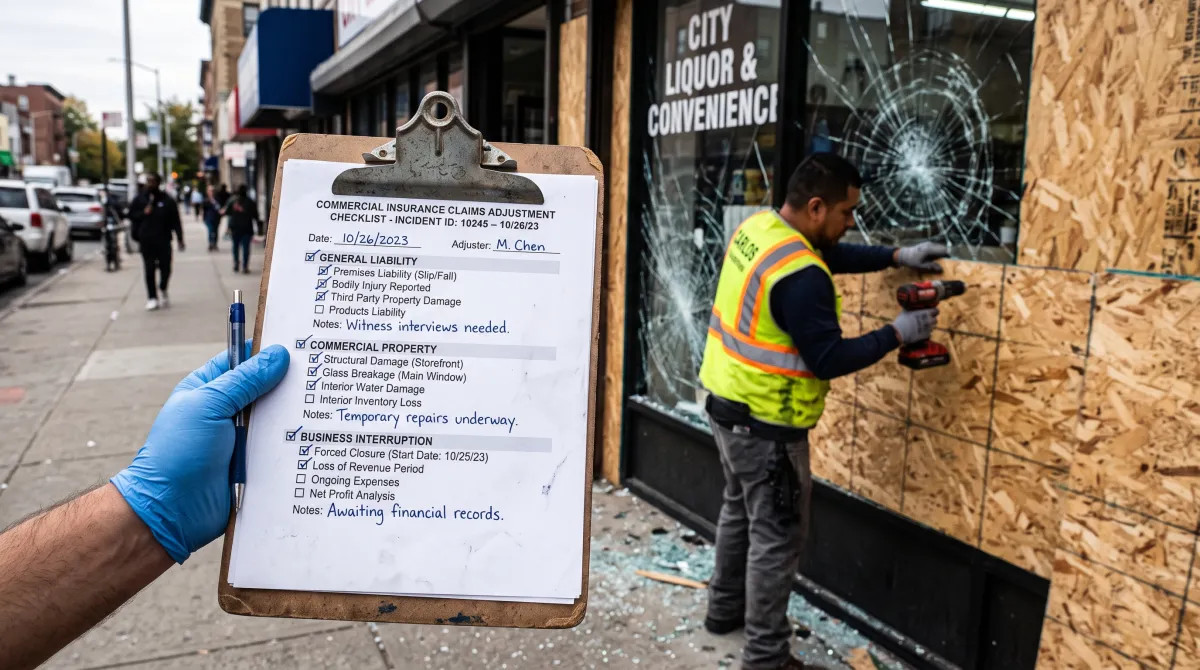
Three coverages sit inside a standard BOP. General liability pays out when a customer gets hurt on your property or you damage someone else's. Commercial property covers your building, inventory, and equipment against fire, theft, and storm damage.
Business interruption is the piece owners forget until they need it. If a covered event shuts your doors, it replaces lost income and helps cover rent and payroll while you rebuild.
A BOP will not cover everything, though. Workers' compensation, commercial auto, professional errors and omissions, flood, and employee health coverage all sit outside it. Those add-ons matter for the wider risk picture every owner eventually has to manage.
Underwriters also ask about how you operate day to day. If your business runs an ecommerce storefront over a dedicated business internet connection, expect questions about data security, since an outage that knocks out order processing is priced differently than a slow line at a physical counter.
A BOP is not extra insurance. It is the same coverage most businesses need anyway, sold without the markup of buying it three times.
Business Owners Policy Bop Examples
A retail shop loses a week of inventory to a kitchen fire next door. Property coverage pays to replace the stock, and business interruption covers the sales the shop would have made while the smell of smoke cleared out.
A consulting firm's client trips over a cord in the waiting room. General liability covers the medical bills and legal defense. If the client instead sued over bad advice, that claim would fall to a separate professional liability policy, not the BOP.
A restaurant's pipe bursts and closes the kitchen for three weeks. Property coverage pays for repairs, and business interruption replaces lost revenue during the closure. Standard ISO policy language typically caps that interruption payout at 12 months, no matter how long repairs actually run.
How to Apply for a Business Owners Policy
Start by gathering your numbers: annual revenue, payroll, square footage, and the replacement value of your inventory and equipment. Underwriters price the policy off these figures, not guesses.
Get your business banking in order next. Many insurers still ask for a voided one of your business checks or a bank letter to set up automatic premium payments, so keep that paperwork handy before you start the application.
Comparing carriers one by one wastes a day you don't have. A broker platform like Simply Business lets you submit your numbers once and see multiple BOP quotes side by side instead of calling five insurers separately.

Keep your service numbers organized too. If you bank with a large institution, saving the chase business customer service line next to your insurer's claims number means a banking hiccup and a claim never get tangled together when you're in a hurry.
Set Up the Business Before You Insure It
Insurers need a legally formed business to underwrite, not just an idea. If you're forming in Wyoming, run a wyoming business entity search first to confirm your LLC name is actually free to use.
The same logic applies elsewhere. An oregon business registry search or a broader oregon business search confirms availability before you file, and a missouri business search does the same if that's your state. Skipping this step is the most common reason applications stall.
None of this replaces the harder work of business building. Insurance protects what you've already built, it doesn't build it for you. Owners who studied business degrees or business majors in college sometimes assume underwriting works like a finance case study. It doesn't. Underwriters price risk off your claims history and industry code, not your resume.
A BOP protects you from physical and liability risk, but plenty of threats never touch your property policy. Recognizing the signs you're being set up to fail at work protects you from internal politics no insurer covers.
Business model shifts like reintermediation can erode margins insurance was never built to replace. That kind of structural risk sits entirely outside what a BOP or any property policy is designed to touch.
Weighing the benefits and risks of innovation shows why some risks are worth taking even when they can't be insured away. A BOP protects what exists today, not the bets you make for tomorrow.
Business Owners Policy Bop: FAQ
Do I need payroll services for small business insurance to also get a BOP?
No. Payroll services handle wages, tax withholding, and often workers' compensation setup, while a BOP covers property damage, liability claims, and lost income. Most businesses eventually need both, but you can buy a BOP first.
Can I use a virtual address for business when I apply for a BOP?
Yes, but tell your insurer where the work actually happens. A virtual address for business is fine for mail, but underwriters price your policy on the physical location of your inventory, equipment, and staff.
Do insurers ask for business plan examples before approving coverage?
Rarely for an established business. New businesses sometimes provide revenue projections instead of full business plan examples, mainly to estimate payroll and sales for pricing, not to judge the idea itself.
Does QuickBooks for small business affect my BOP premium?
Indirectly, yes. Many BOPs get audited annually, and insurers ask for the sales and payroll totals you already track in QuickBooks for small business to true up the final premium.
Should I connect QuickBooks Online for small business to my insurance portal?
Some larger carriers offer that integration so your QuickBooks Online for small business data feeds the annual audit automatically. It's optional. You can still upload reports manually if you'd rather not link accounts.