Business Concepts
Business Owner (2026): The Real Setup Checklist
What it actually takes to become a business owner in 2026: legal structure, banking, insurance, and the state filings most guides skip. See the full checklist.

A business owner is the person who takes on the risk, the paperwork, and the upside of running a company, from a solo LLC to a 40-person shop with a storefront. About 36 million people carry that title in the United States today. This guide covers what it actually takes to become a business owner in 2026, from the education path to the day-one setup checklist most guides skip.
Quick answer
A business owner is anyone who owns and operates a company, from a solo freelancer to the founder of an LLC or corporation with employees. Becoming one means picking a legal structure, registering the name with your state, opening a business bank account, and lining up insurance before the first sale.
Key takeaways
- The U.S. has 36.2 million small businesses, and 82% of them run with no employees at all.
- A business degree helps, but no state requires one to register and run a company.
- Banking, insurance, and business internet are the setup costs new owners underestimate most.
- Only 42% of small business loan applicants got the full financing they asked for last year.
- State entity searches, like Wyoming, Oregon, or Missouri, are free and the first real step.
What Does It Mean to Be a Business Owner?
A business owner holds legal responsibility for a company's debts, taxes, and decisions, in exchange for the profit it generates. That responsibility looks different depending on the structure: a sole proprietor, an LLC, an S-corp, or a full corporation. The choice sits among the core business concepts every new owner has to learn fast.
The U.S. now counts 36,207,130 small businesses, making up 99.9% of all American firms, according to the SBA Office of Advocacy's 2026 report. Those businesses employ 62.3 million people, 45.9% of the private-sector workforce. Roughly 82% of them are solo operations, meaning the owner is also the only employee.
Not every business owner runs the same kind of company. A freelancer invoicing clients from a laptop is a business owner. So is a franchise operator with a staff of twenty and a lease on a storefront. The paperwork scales with the size, but the core job, deciding where the money goes, stays the same.
Do You Need a Business Degree to Become a Business Owner?
No state requires a diploma to register a company, but a business degree shortens the learning curve. Programs built around business degrees cover accounting, marketing, and operations before a single dollar is at risk. A business major in finance or management gives new owners a vocabulary they would otherwise learn the expensive way.
Popular business majors, like marketing, accounting, and supply chain management, map directly onto the departments a growing company eventually builds. An owner who studied one in school often ends up running that same department by default, at least until the first hire.
Owners who skip the classroom usually make it up through a part-time MBA, a focused business management course, or a mentor inside their industry. None of that is required before day one. What matters more is whether the owner understands cash flow, pricing, and the legal steps before opening for business.
Business Owner Toolkit Compared
Most new owners underspend on education and overspend on branding, then get surprised by the operational basics. The table below compares five things every business owner sets up in the first month, regardless of industry.
| Setup item | What it does | Typical first step |
|---|---|---|
| Legal structure | Limits personal liability and sets your tax treatment | File as an LLC or corporation with your state |
| Business banking | Separates personal and company money for taxes and audits | Open a business checking account, then order business checks |
| Insurance | Covers liability, property, and workers if you hire | Compare quotes through a broker like Simply Business |
| Business internet and phone | Keeps operations, payments, and calls running | Compare small business internet plans in your area |
| Bookkeeping software | Keeps the books audit-ready without hiring help in month one | Connect a tool like QuickBooks Online to the new business account |
Best for day-one bookkeeping
QuickBooks Online From $20/mo (Solopreneur)
The fastest way for a new business owner to keep books audit-ready without hiring a bookkeeper in month one. Intuit raised prices across most tiers in August 2026, so check the current plan before you commit.
Pros
- Connects directly to most business bank accounts and cards
- Generates the reports lenders and the SBA ask for
Cons
- Payroll is a separate add-on, not included in any plan
- Plus and Advanced tiers got noticeably more expensive in 2026
None of these setup items are optional once you have paying customers. Skipping one now usually means paying more to fix it later, after a lawsuit, a bounced check, or a missed sales call.
Setting Up as a Business Owner: Day-One Checklist
Once the idea is real, the paperwork moves fast. Here is the order most owners follow, state filing first and utilities last.

- Search the business name. A Wyoming business entity search, an Oregon business registry or Oregon business search, and a Missouri business search all work the same way: confirm the name is free before you file anything.
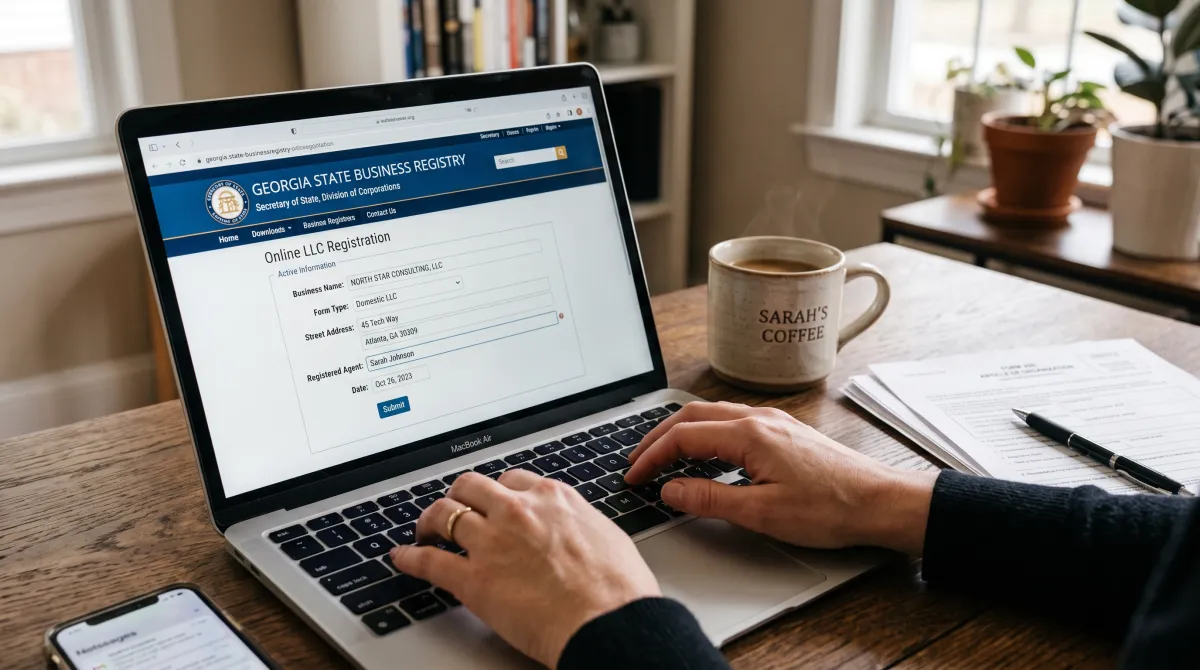
- Register the structure. File the LLC or corporation paperwork with your state, then apply for an EIN with the IRS.
- Open the business bank account. Chase business customer service is available 24 hours a day through the Business ServiceLine at 1-800-242-7338, and can walk new owners through account setup.
- Order business checks. Vendors and landlords still expect paper checks for larger payments. See the business checks guide for pricing and where to order them.
- Buy insurance. Simply Business, acquired by Travelers in 2017, connects owners to more than 15 carriers, including CNA, Markel, and Hiscox, from one online form.
- Set up utilities. Business internet and a dedicated phone line are the last box to check before opening, whether you work from a home office or a full business building downtown.
The paperwork does not make you a business owner. Making the right call when money is tight does.
How to Choose Your Path as a Business Owner
Plenty of owners start the business next to a full-time job. That works until the job starts eating the hours the business needs, one of the same signs you are being set up to fail at work that show up in any stretched assignment.
The business model matters as much as the paperwork. Some owners build a direct-to-customer shop. Others insert themselves back into a supply chain through reintermediation, becoming the middleman a website once cut out.
Funding is the real constraint for most first-time owners. Only 42% of small business loan applicants received all the financing they requested in the latest Federal Reserve survey cited in the SBA's report. Before adding a new product line, weigh the benefits and risks of innovation against what the business can actually fund.
Business Owner FAQ
What payroll services work best for a small business just starting out?
Payroll services for small business owners that bundle tax filing with direct deposit prevent the most common early compliance mistake. Most platforms also handle the state filings a first-time owner would otherwise miss.
Do I need a virtual address for my business?
A virtual address for business keeps a home address off public filings and gives the company a professional mailing point. It is worth the monthly fee for any owner running the business from home.
Where can I find business plan examples?
The SBA and SCORE both publish free business plan examples by industry, covering the executive summary, market analysis, and financial projections a lender expects. Studying two or three in your industry beats starting from a blank page.
Is QuickBooks worth it for a small business?
QuickBooks for small business owners earns its cost once transactions pass a handful a month, since it keeps the books ready for tax season. The setup takes an afternoon, not a training course.
What is the difference between QuickBooks Online and the desktop version?
QuickBooks Online for small business teams adds cloud access and real-time collaboration with a bookkeeper, while the desktop version stays on one machine. Most new owners pick the online version for that remote access alone.