Business Concepts
Business Casual Shoes: 15+ Examples for Men & Women (2026)
Business casual shoes explained: what counts, real examples for men and women, and a smart way to budget for pairs that actually last. See what fits.
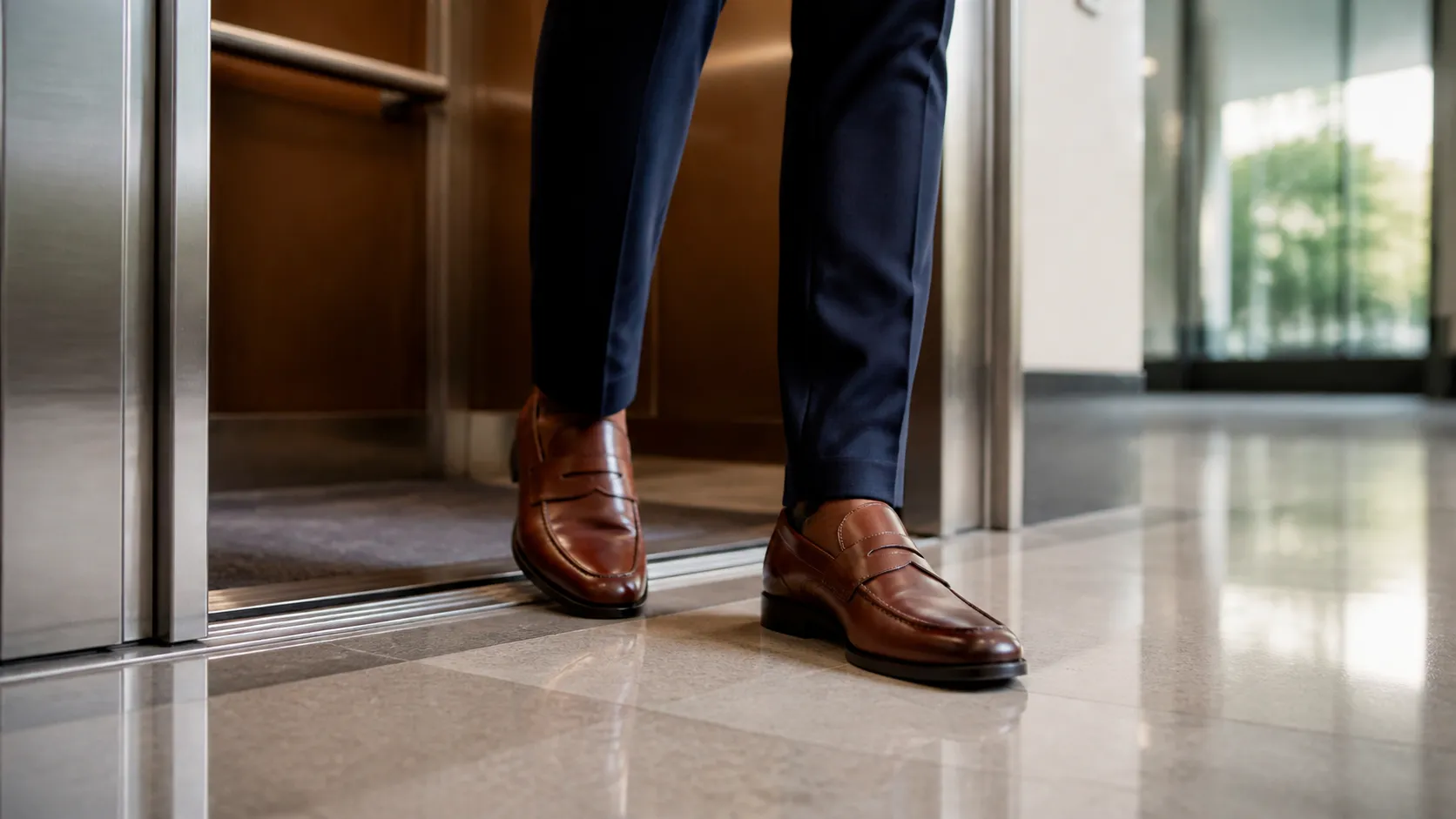
If you're building a professional wardrobe, business casual shoes are the detail that quietly signals competence before you say a word. This guide covers what actually counts as business casual, real examples for men and women, and a business owner's way to budget for shoes that last.
Quick answer
Business casual shoes are closed-toe leather or leather-look shoes such as oxfords, loafers, low block heels, or clean minimalist sneakers, worn with tailored trousers or a knee-length skirt. They skip the extremes: no sneakers with obvious branding, no flip-flops, no stilettos in most offices.
Key takeaways
- Business casual shoes sit between formal dress shoes and casual sneakers.
- Leather, suede, or high-quality leather-look materials read as more professional than canvas or mesh.
- Neutral colors like black, brown, navy, and tan mix with more outfits and last longer in rotation.
- Treat your shoe budget like a business treats capital spending: buy fewer, better pairs.
- Rotate at least two pairs to slow wear and extend the useful life of each one.
What Are Business Casual Shoes?
Business casual shoes are footwear that looks polished without tipping into formal dress-shoe territory. Think leather loafers, oxfords, block-heel pumps, or clean low-top sneakers in solid, neutral colors. They fit the wider business concepts that shape how offices dress today: professional, comfortable, and adaptable to a hybrid workweek.
What counts as business casual shifts by industry and region, per general guidance on business casual dress codes. A law firm and a marketing agency rarely agree on where the line sits. The safest approach is to match the most conservative person on your team, then adjust once you understand the room.
Business Casual Shoes Explained
Material is the first signal. Full-grain leather, suede, and quality synthetic leather all read as intentional. Canvas, mesh, and obvious athletic branding read as weekend wear, even on an otherwise sharp outfit.
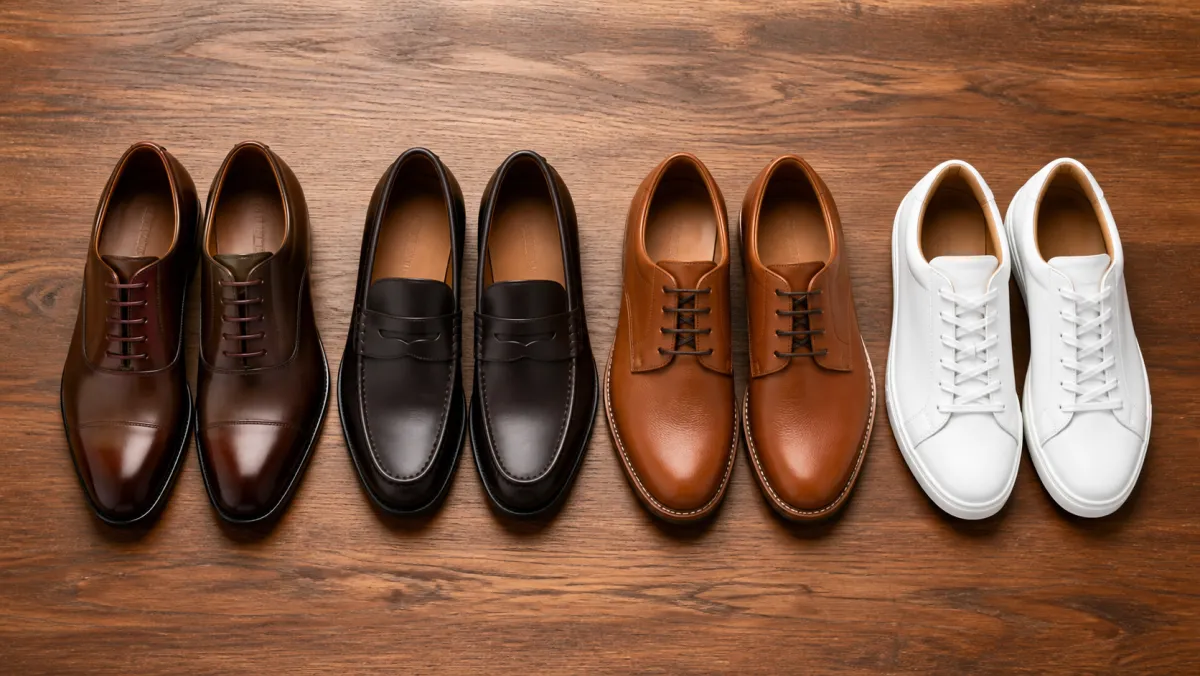
Shape matters almost as much as material. Rounded or slightly pointed toes look more professional than bulky athletic soles or square, chunky toe boxes. A low to mid heel height, generally under two inches, keeps shoes practical for a full day on your feet.
Color discipline pulls the rest together. Black and dark brown pair with nearly every trouser color. Tan and navy work well in warmer months or creative offices. Bright colors or heavy patterns can work in design and marketing roles, but they carry more risk in finance, law, or client-facing sales.
Business Casual Shoes Examples
For men, business casual usually means one of four options: leather oxfords, leather loafers such as penny, tassel, or horsebit styles, clean leather derbies, or minimalist leather sneakers in white, black, or navy.
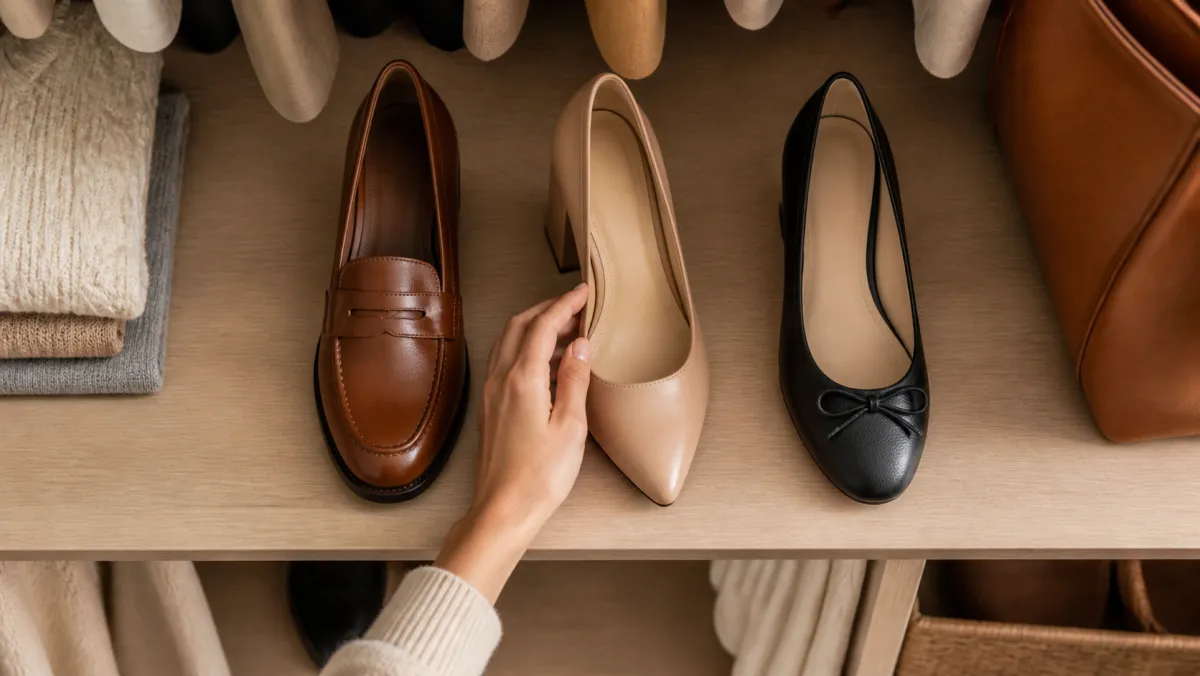
For women, common business casual choices include leather loafers, low block-heel pumps, ballet flats in structured leather, or ankle boots with a slim but stable heel. Pointed-toe flats work in most offices and transition easily from desk to client meeting.
Examples that usually fall outside business casual: flip-flops, slides, running shoes with visible mesh panels, flat sandals without back support, and anything with heavy distressing or bright graphic prints.
How to Apply Business Casual Shoes
Start by auditing what you already own. Pull anything closed-toe and neutral, then sort by condition. Scuffed leather can often be restored with polish and a heel repair, which is far cheaper than replacing the pair.
Build around two or three core pairs rather than a large, mismatched collection. One black pair, one brown or tan pair, and one weather-appropriate boot cover most business casual situations without overspending.
Ignoring dress code cues is one of several signs you are being set up to fail at work, especially in client-facing or leadership-track roles where first impressions carry real weight. Shoes are an easy, low-cost way to close that gap.
Newer materials also matter. Advances tied to the benefits and risks of innovation in footwear, like machine-washable leather alternatives and antimicrobial linings, now make business casual shoes more practical for long commutes and hybrid schedules.
The Business Side of Building a Shoe Wardrobe
Treat your shoe wardrobe like a small capital budget. The core depreciation meaning is simple: an asset loses value as it wears out. Once you understand that depreciation definition, a $150 pair of leather loafers worn twice a week for two years often costs less per wear than a $40 pair replaced every three months.
Retail overproduction floods stores with trend-driven shoes that lose resale value fast once a season ends, so buying classic styles protects your investment. Picking up two or three pairs from one trusted brand, or during a single sale event, mirrors the economies of scale definition companies rely on to cut per-unit costs.
Your monthly clothing budget works like the working capital definition used in a small business: money kept liquid enough to cover regular, recurring needs without straining the rest of your finances. Spreading shoe purchases across a few months protects your personal cash flow definition the same way pacing vendor payments protects a company's.
Your shoe budget is a capital budget. Spend like an operator, not like a fashion impulse buyer.
If you resell worn pairs online, tracking who still owes you payment is a personal version of the accounts receivable definition, and knowing the accounts receivable meaning helps you follow up before a buyer forgets. Listing your shoes and their current value is a simple balance sheet definition in action, and grasping the balance sheet meaning helps you see your wardrobe as an asset, not just an expense.
Reselling a gently worn pair above what you paid, after light repair costs, is a hands-on lesson in the gross margin definition, and the gross margin meaning becomes obvious the moment you calculate your profit.
Selling through resale marketplaces is also a small, real-world example of reintermediation: the platforms reinsert a trusted middleman between you and the buyer in exchange for more reach and easier trust.
Business Casual Shoes: FAQ
What are balance sheet examples?
A balance sheet example lists what a business or household owns, like cash and inventory such as shoes, against what it owes, such as loans, on one specific date. Comparing owned assets to liabilities shows real net worth at a glance.
What is accounts receivable?
Accounts receivable is money owed to you for something already delivered, like a shoe resale a buyer promised to pay for later. It sits on the asset side of your books until the payment actually arrives.
What is working capital?
Working capital is the cash you keep available to cover short-term, recurring costs without selling long-term assets. For a household, that is the buffer that lets you buy a needed work shoe without disrupting rent or bills.
What do profit and loss statement examples look like?
A profit and loss statement example lists income from sales on one side and costs, like materials or shipping, on the other, ending in a net profit or loss for the period. Reselling shoes at a markup is a simple version of the same math.
What is gross margin?
Gross margin is the percentage of revenue left after subtracting the direct cost of the goods sold. If you resell a $60 pair of shoes you bought for $40, your gross margin is roughly 33 percent.