Business Concepts
Associates in Accounting: Degree vs. Job Title Guide (2026)
Associates in accounting means two different things: a two-year degree or an entry-level job title at Big 4 firms. See which one fits your career move.

Ask ten people what associates in accounting means and you get two different answers. Some mean the entry-level job title used across the Big 4 accounting firms. Others mean the two-year associate degree that gets a student into the field in the first place. Both paths matter, and this guide keeps them straight.
I have watched new hires confuse the two, apply to the wrong program, or misread a job posting because nobody explained the split. This guide, part of our business concepts series, separates the degree from the title, shows how each one actually works, and gives you a way to decide which one you need right now.
Quick answer
Associates in accounting refers to two distinct things: an associate degree in accounting, a two-year credential that teaches bookkeeping and financial accounting basics, and an associate job title, the entry-level rank at accounting services firms including the Big 4. The degree gets you hired; the title is what you are hired as.
Key takeaways
- An associate degree in accounting is a roughly 60-credit, two-year program that covers financial accounting, managerial accounting, and the accounting cycle.
- An accounting associate is the first job title on the ladder at Big 4 accounting firms, ranking below senior associate and manager.
- Most states require 150 credit hours, not the standard 120, before you can sit the CPA exam, so an associate degree alone will not qualify you.
- The associate-to-partner track at a Big 4 firm commonly takes 12 to 15 years, with promotions roughly every two to three years.
- Associates in business is a broader label that also covers finance, consulting, and audit-adjacent entry roles, not just accounting.
What Is Associates In Accounting?
Associates in accounting is not one thing. It is a term that covers an academic credential and a job rank, and mixing them up leads to wasted applications. The associate degree route is an education path. The job-title route is a career rank inside firms that sell accounting services to clients.
As a credential, an associate degree in accounting is a two-year program, usually at a community college, built around financial accounting, cost accounting, and the accounting cycle. It qualifies graduates for bookkeeping and junior clerk roles, and it can transfer into a four-year accounting major later.
As a job title, an accounting associate is the entry rung at a firm, most visibly at the Big 4 accounting firms, Deloitte, PwC, EY, and KPMG. New graduates start as audit, tax, or advisory associates and get assigned to client engagements almost immediately.
Associates In Accounting Explained
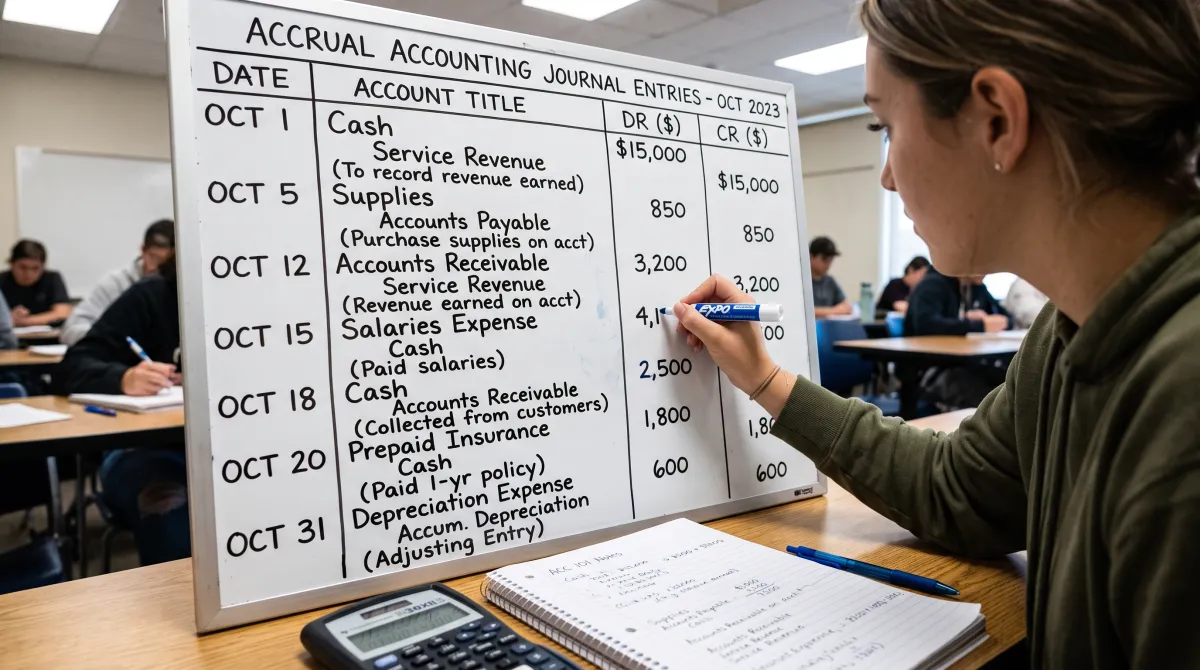
The degree side is straightforward. An associate degree runs about 60 credit hours, roughly half the 120 hours a bachelor's degree needs, and covers introductory financial accounting, managerial accounting, and business math. Most programs finish in two years of full-time study.
The job-title side is more of a ladder. A new accounting associate spends the first two or three years learning client work: testing controls, preparing tax returns, or supporting advisory projects under a senior associate. Most U.S. state boards of accountancy require 150 semester credit hours of college coursework, 30 hours more than a standard bachelor's degree, before a candidate can sit for the CPA exam, so an associate degree by itself does not clear that bar.
That 150-hour rule is why so many accounting majors add a fifth year or a master's on top of their bachelor's. It also explains why an accounting associate at a Big 4 firm without a CPA yet is common in year one, and why firms often pay for the extra accounting courses needed to reach 150 hours.
Accrual accounting is where the coursework gets real for new associates. Instead of recording cash when it changes hands, accrual accounting matches revenue and expenses to the period they belong to, which is the standard method almost every client and employer uses. Associates who understand this early move faster than peers who only learned cash-basis bookkeeping.
Associates In Accounting Examples
On the job-title side, common examples include audit associate, tax associate, and advisory associate, all first-year ranks at Big 4 and mid-size accounting services firms. A financial accounting associate at a corporate finance department is another version, closing the books monthly instead of auditing a client's books.
On the degree side, examples include an Associate of Applied Science in Accounting or an Associate of Science in Accounting, both typically transferable into a four-year accounting major. Graduates commonly move into accounting costs and payroll clerk roles, or bookkeeping positions, while finishing a bachelor's part time.
Associates in business is the umbrella term worth knowing too. It covers the same associate-degree and associate-title pattern in finance, marketing, and consulting, not just accounting, so a job posting for a business associate is not automatically an accounting role.
| Aspect | Associate degree in accounting | Accounting associate (job title) |
|---|---|---|
| What it is | A 2-year academic credential | An entry-level rank at a firm |
| Typical length | ~60 credit hours, 2 years | 2 to 3 years before promotion |
| Leads to | Bookkeeping roles or a bachelor's | Senior associate, then manager |
| CPA eligible alone? | No, needs 150 total credit hours | Only once 150 hours are met |
The degree gets you in the door. The title tells you which door you walked through.
How to Apply Associates In Accounting

If you are choosing the degree route, apply to an accredited community college and confirm the credits transfer to a four-year accounting major before you enroll. Ask the transfer office directly; not every associate degree articulates cleanly into every bachelor's program.
If you are targeting the job-title route, apply during campus recruiting season if you are still in school, since Big 4 accounting firms hire most associates a year ahead of the start date. Highlight any accounting courses in cost accounting, accrual accounting, or cpa accounting exam prep on your resume, since recruiters scan for them specifically.
Automation is reshaping the entry-level associate role faster than most students expect. Firms now expect associates to review software-generated reports rather than build them by hand, a shift that mirrors the benefits and risks of innovation playing out across accounting services more broadly. Associates who learn the tools early get staffed on more interesting engagements sooner.
New associates should also watch for common early missteps. Overcommitting to client deadlines without flagging capacity issues is one of the fastest ways to end up set up to fail at work in your first busy season.
As firms shift more junior review work to software, understanding reintermediation in professional services explains why human judgment still anchors the associate role even as the tools change.
Associates In Accounting: FAQ
Cash vs accrual accounting: what is the difference?
Cash accounting records income and expenses only when money actually moves, while accrual accounting records them when they are earned or incurred, regardless of when cash changes hands. Nearly all firms above a small size use accrual accounting because it matches revenue to the period it belongs to.
Finance vs accounting: how are they different?
Accounting records and reports what already happened financially, producing statements built on financial accounting and managerial accounting principles. Finance uses those records to plan ahead, covering budgeting, investing, and raising capital. Accountants look backward to report accurately; finance professionals look forward to decide.
Bookkeeping vs accounting: what sets them apart?
Bookkeeping is the day-to-day recording of transactions, such as invoices and receipts, into a ledger. Accounting goes further, interpreting those records through financial accounting and cost accounting methods to produce statements, taxes, and analysis. Most accounting associates start with bookkeeping-adjacent tasks before moving into full accounting work.
What is folio in accounting?
A folio in accounting is a page or reference number in a ledger or journal used to cross-reference an entry back to its source document. It is a holdover from paper-based bookkeeping that still appears in the accounting cycle as a column heading in modern software.