Business Concepts
Airbus A380 800: Specs, Range, and Seating (2026)
The Airbus A380 800 is Airbus's only production superjumbo, seating 525 passengers over 8,000 nautical miles. See specs, history, and active fleets.
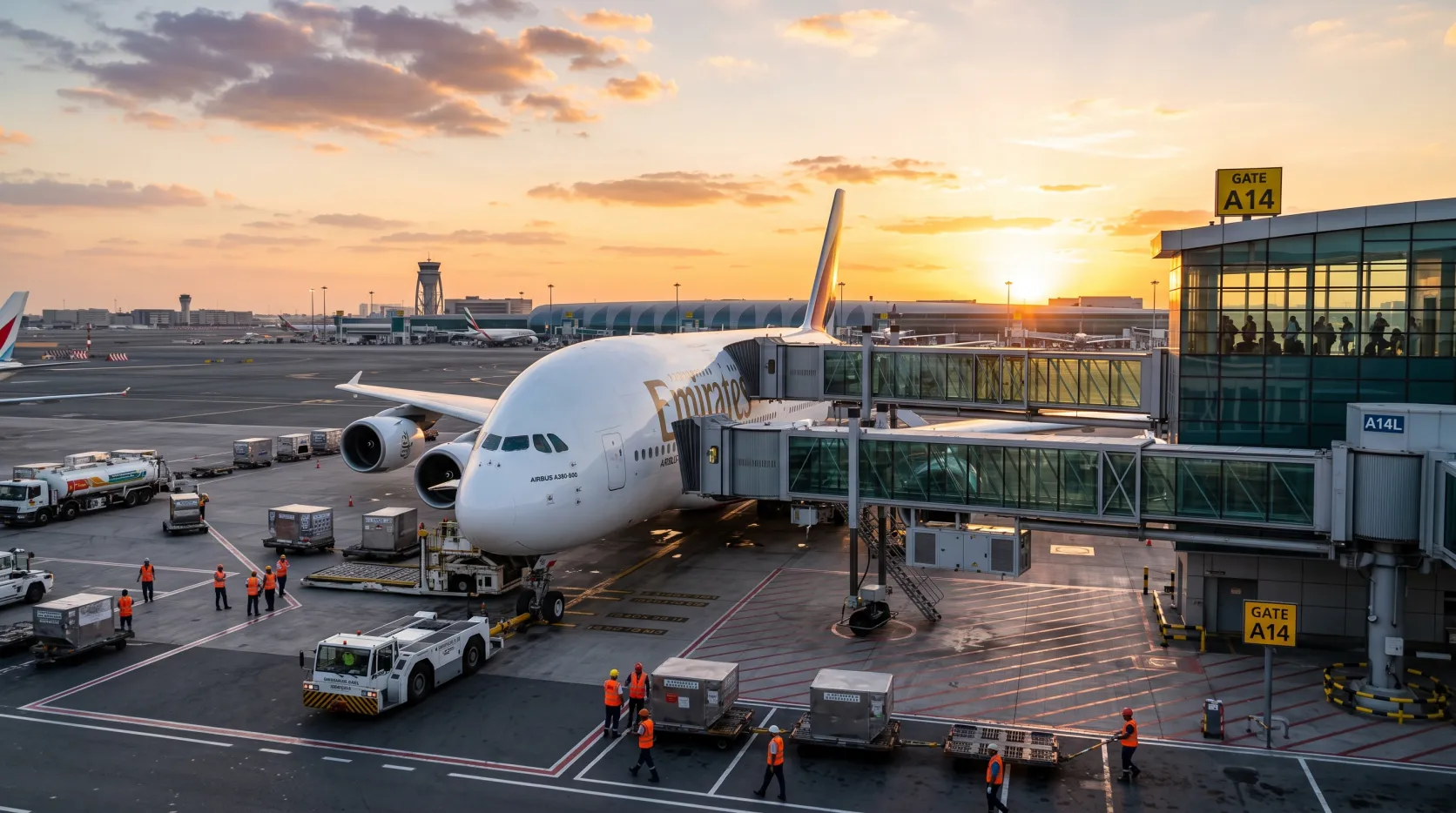
Airbus A380 800 is the official name for the only production version of the Airbus A380, the world's largest passenger jet. Airbus built it as a four-engine, full double-deck airliner in Toulouse, France, and marketed it to airlines that needed maximum capacity on their busiest long-haul routes.
Quick answer
The Airbus A380 800 is the standard, and only, production variant of the Airbus A380 superjumbo. It seats roughly 525 passengers in three classes across two full decks, flies about 8,000 nautical miles, and was built between 2005 and 2021 before Airbus ended production.
Key takeaways
- The A380 800 is the only A380 variant Airbus ever delivered; a freighter version and a stretched model were both cancelled before launch.
- It first flew on 27 April 2005 and entered service with Singapore Airlines in October 2007.
- Typical seating is 525 passengers in three classes, with a certified maximum near 853 in all-economy layouts.
- Airbus closed the production line in December 2021 after building 251 aircraft.
- Emirates operates the largest A380 800 fleet, followed by Singapore Airlines, Qantas, and British Airways.
What Is Airbus A380 800?
Airbus A380 800 is the type designation Airbus assigned to its double-deck superjumbo once the planned freighter variant, the A380-800F, was shelved. In practice, whenever anyone mentions the A380 today, they mean the A380 800, since no other version ever reached commercial service.
The name follows Airbus's own numbering system, where digits after the model number describe engine and payload variants. Airbus originally planned an A380-800F freighter and a stretched A380-900, but both were cancelled before launch, leaving the A380 800 as the sole production model.
Airbus built the A380 800 this big because it bet on hub-to-hub economics: fewer, fuller flights between mega-airports instead of many smaller connections. That wager is a real-world case study in business concepts like economies of scale, where unit costs per seat fall as aircraft size grows, provided every seat actually sells.
Airbus A380 800 Explained
Structurally, the airbus a380-800 is a wide-body aircraft with a full-length upper deck, something no other jetliner has offered before or since. The Airbus A380 800 measures 72.72 meters long, spans 79.75 meters wingtip to wingtip, and has a maximum takeoff weight of 575,000 kg (1,267,658 lb), according to Airbus's published aircraft data.
Two engine options power it: the Rolls-Royce Trent 900 or the Engine Alliance GP7200, each producing roughly 70,000 to 81,500 pounds of thrust depending on the variant. Airlines pick one engine family per order and keep it for the life of the fleet.
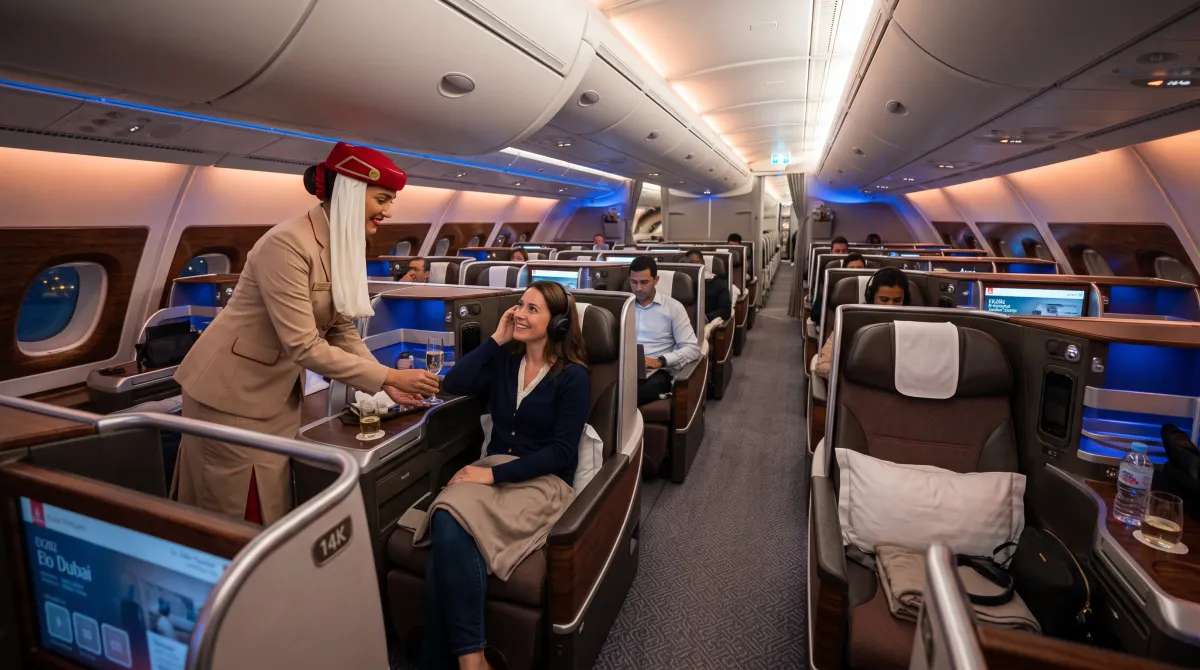
Inside, the airbus a380-800 dedicates its upper deck mostly to business and first class on most carriers, while the main deck below carries premium economy and economy seating side by side. That layout is what lets some all-economy charter configurations pack in over 800 seats.
Cabin altitude and noise are two reasons frequent flyers often prefer the A380 800 over smaller jets. Airbus pressurizes the cabin to roughly 5,000 feet at cruise, and the four-engine layout spreads noise across a wider fuselage, which many long-haul passengers report as a quieter ride than twin-engine widebodies.
The Airbus A380 800 first flew on 27 April 2005 and entered commercial service with Singapore Airlines on 25 October 2007, flying the Singapore to Sydney route. That flight made Singapore Airlines the world's first A380 operator, ahead of Emirates and Qantas.
Understanding why Airbus bet on size over frequency ties back to the same tradeoff between unit economics and route density, and it explains why relatively few airlines ever ordered the type.
For comparison, Boeing's closest rival, the Boeing 747-8, took a different approach to size, stretching a four-engine design instead of adding a full second deck.
| Spec | Airbus A380 800 | Boeing 747-8 |
|---|---|---|
| Typical seating (3-class) | 525 | 410 |
| Max certified seating | 853 | 605 |
| Length | 72.72 m | 76.3 m |
| Wingspan | 79.75 m | 68.4 m |
| Range | ~8,000 nmi | ~7,730 nmi |
| Engines | 4x Trent 900 or GP7200 | 4x GEnx-2B67 |
Airbus A380 800 Examples
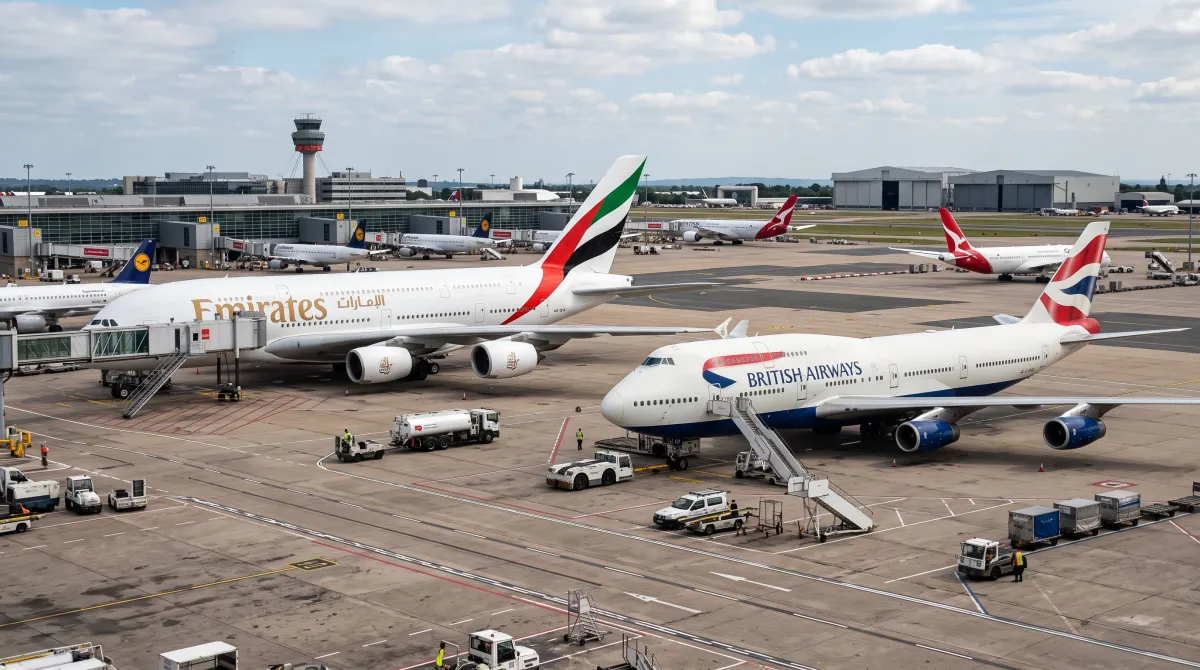
Emirates built the world's largest A380 800 fleet, using the type on trunk routes like Dubai to London, New York, and Sydney, where demand justifies an 800-seat aircraft. Singapore Airlines, Qantas, British Airways, Lufthansa, and Qatar Airways also flew sizeable fleets on similarly dense long-haul corridors.
On routes such as Dubai to Auckland or Singapore to New York, the A380 800's four engines and long range make it one of the few jets able to fill demand without a fuel stop, provided both airports have A380-capable gates.
Airbus delivered the final A380, an A380 800 built for Emirates, in December 2021, closing out a production run of 251 aircraft after 16 years, according to Airbus's delivery records. No airline has placed a new order since.
As of early 2026, airlines still operate the large majority of the 251 A380 800s Airbus delivered, though a handful sit retired or in long-term storage after demand dipped during the pandemic, according to fleet data tracked by aviation analysts such as ch-aviation.
Airlines that skipped the A380 800 often built their long-haul strategy around smaller widebodies instead, a shift not unlike reintermediation in other industries, where a middle step in the value chain quietly disappears.
The A380 800 never lost a passenger's argument about legroom; it lost the argument about fuel burn per seat on thinner routes.
How to Apply Airbus A380 800
Travelers who want to fly the Airbus A380 800 specifically should filter flight searches by aircraft type, since airlines often swap equipment close to departure. Seat maps for the upper deck and the main deck economy cabin differ enough that checking the aircraft type before booking matters.
Airports had to invest heavily to host the airbus a380-800, adding dual-level jet bridges, reinforced taxiways, and wider gate spacing to handle its 79.75 meter wingspan. Airports without that infrastructure simply cannot accept A380 800 service, which limited the jet to a shortlist of major hubs.
Ground crews also need specialized loaders and wider baggage systems to turn an A380 800 around on schedule, which is part of why only a few dozen airports worldwide accept scheduled A380 800 service.
Betting an airline's long-haul strategy on one giant aircraft type carries real tradeoffs, the same kind of benefits and risks of innovation that show up whenever a company chases scale before demand is proven.
Reading structural signals early matters here too. Airlines that ignored shifting demand on their A380 800 routes missed the same kind of warning signs as employees who overlook signs you are being set up to fail at work: the data was there, but nobody acted on it.
Airbus A380 800: FAQ
Is the Airbus A380 800 still in production?
No. Airbus ended A380 800 production in December 2021, delivering the last aircraft to Emirates after building 251 units over 16 years.
How many passengers does an Airbus A380 800 hold?
Most airlines configure the A380 800 for around 525 passengers across three classes, though the type is certified for up to 853 passengers in an all-economy layout.
Which airlines still fly the Airbus A380 800?
Emirates, Singapore Airlines, Qantas, British Airways, Lufthansa, and Qatar Airways all operate active A380 800 fleets, mainly on high-demand long-haul routes.
What is the range of an Airbus A380 800?
The A380 800 has a design range of about 8,000 nautical miles (14,800 km), enough to connect city pairs like Dubai and Los Angeles nonstop.
Why did Airbus stop building the A380 800?
Airbus stopped building the A380 800 because airlines shifted toward smaller, more fuel-efficient twin-engine widebodies like the Boeing 787 and Airbus A350, which fly similar passenger volumes at lower cost per seat.