Business Concepts
Airbus A350 1000 (2026): Specs, Range and Cabin Guide
Airbus A350 1000 specs explained: range, seating capacity, and engines, plus how it compares to the A350-900 and the business case behind it.
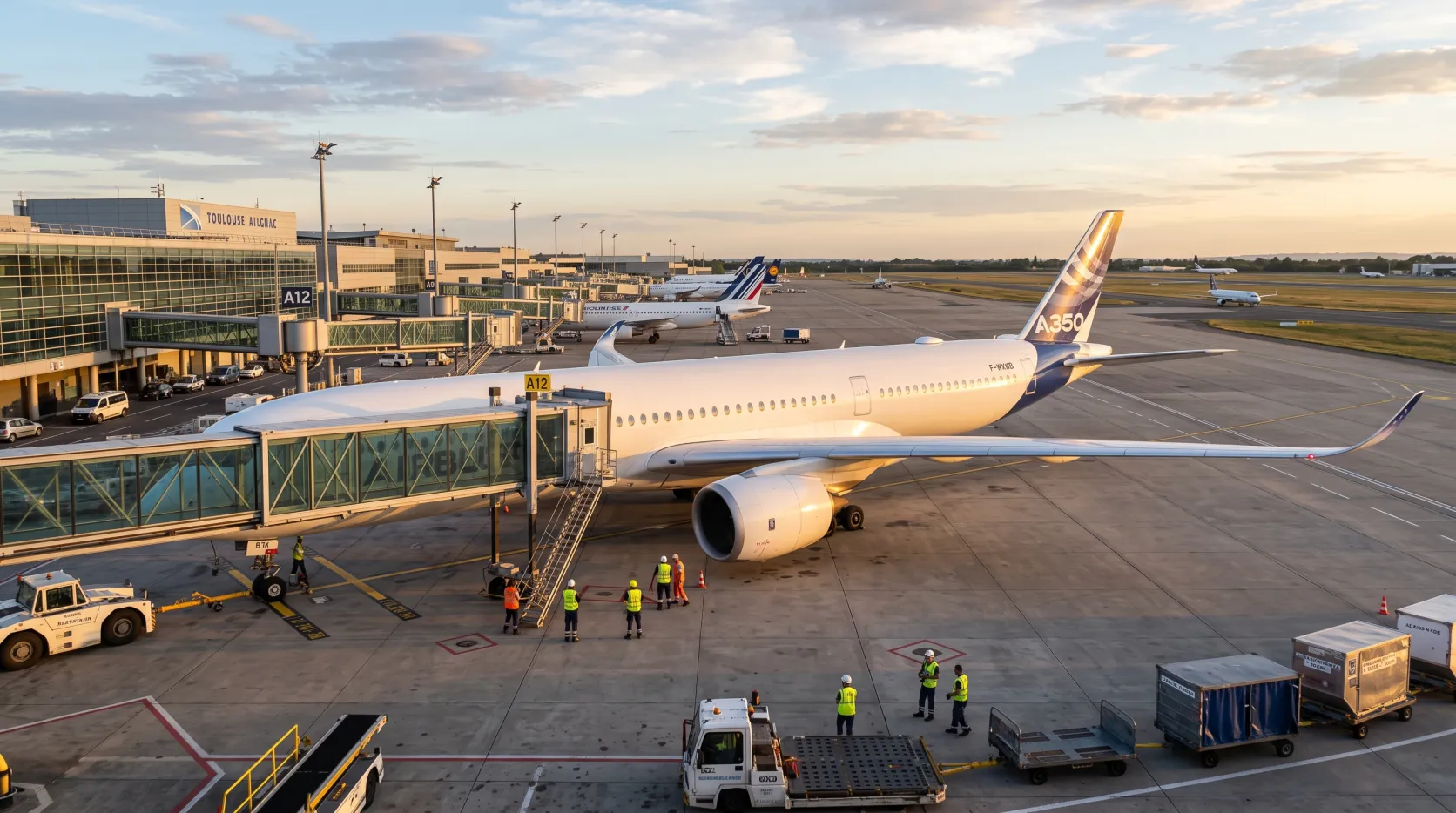
The Airbus A350 1000 is the largest, longest-range member of Airbus's A350 family, built to carry full loads of passengers over ultra-long routes without a fuel stop. This guide breaks down what makes the jet different from its shorter sibling, the A350-900, which airlines fly it today, and why its history doubles as a case study in industrial risk.
Quick answer
The Airbus A350 1000 is a twin-engine widebody jet, the stretched, longer-range variant of the A350 family, seating roughly 366 passengers in a typical three-class layout and flying about 8,400 nautical miles nonstop. It entered service with Qatar Airways in 2018 and now flies with carriers including British Airways, Cathay Pacific, Etihad Airways, Virgin Atlantic, and Emirates.
Key takeaways
- The A350 1000 is about 7 meters longer than the A350-900, Airbus's other main A350 variant.
- It flies exclusively on Rolls-Royce Trent XWB-97 engines, the most powerful version of the Trent XWB family.
- Typical three-class seating sits near 366 passengers, though airlines configure the cabin very differently.
- Qatar Airways launched the aircraft in 2018; Emirates joined years later after a well-publicized engine dispute.
- The program's stretch-and-delay history is a useful case study in how companies weigh the benefits and risks of innovation.
What Is Airbus A350 1000?
Airbus A350 1000 is the largest passenger variant of the Airbus A350 XWB family, a twin-aisle, twin-engine jet built for long-haul routes that need more seats and more range than the standard A350-900 can offer. It shares most of its airframe with the A350-900, but stretches the fuselage and upgrades the engines.
This guide sits inside our wider business concepts library, since the jet's stretch-and-delay story doubles as a lesson in industrial decision-making, not just aviation trivia.
Airbus built the jet to compete directly with Boeing's 777-300ER and later the 777X, targeting the same long, thin routes where airlines need cabin capacity without stepping up to a four-engine jumbo like the retired A380.
The letters XWB stand for extra wide body, Airbus's term for the wider fuselage cross-section shared by both A350 variants. That extra width lets airlines fit nine-abreast economy seating with more shoulder room than older widebody jets offered.
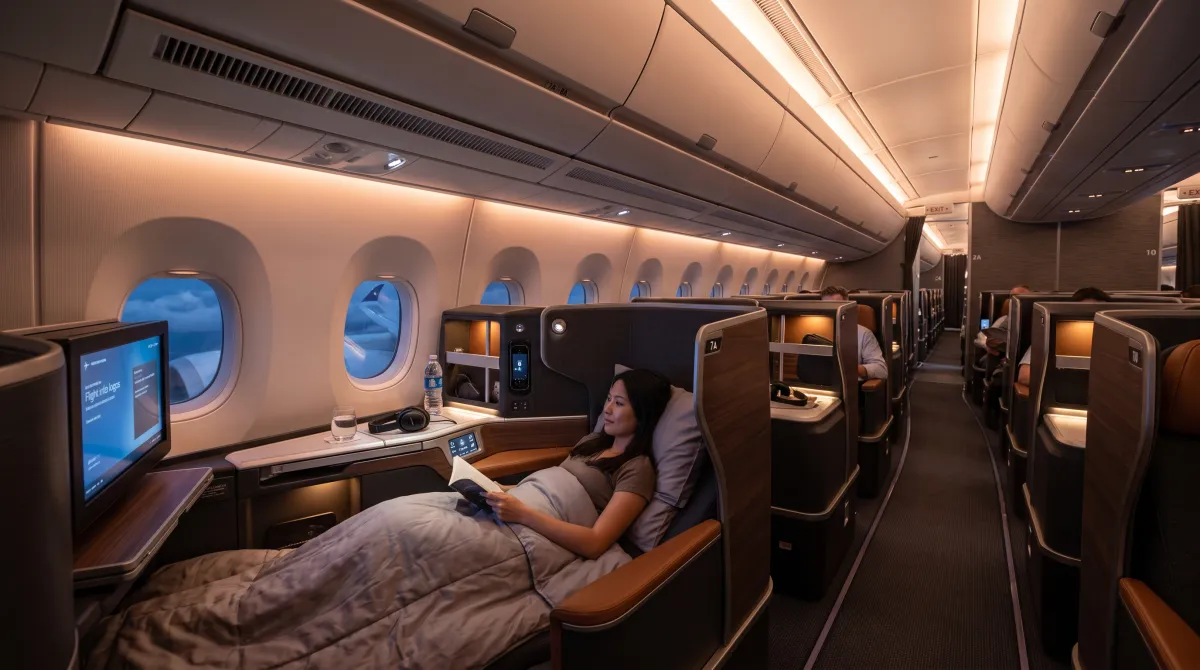
Airbus A350 1000 Explained
The Airbus A350 1000, sometimes written as the airbus a350-1000, differs from the A350-900 in three main ways: a longer fuselage, a higher maximum takeoff weight, and a more powerful engine built specifically for the stretch.
The Airbus A350-1000 stretches about 7 meters longer than the A350-900, giving it a typical three-class capacity near 366 seats, according to Airbus's published aircraft data.
That extra length adds four fuselage frames ahead of the wing and three behind it. The wing itself keeps the same span as the A350-900, but Airbus fitted larger, drooped wingtip devices to handle the added weight.
Airbus A350-1000 vs A350-900: What Changed
The table below lines up the two variants side by side, using Airbus's own published specifications.
| Spec | Airbus A350-900 | Airbus A350-1000 |
|---|---|---|
| Typical 3-class seats | About 325 | About 366 |
| Length | 66.8 m | 73.8 m |
| Engine | Rolls-Royce Trent XWB-84 | Rolls-Royce Trent XWB-97 |
| Typical range | About 8,100 nmi | About 8,400 nmi |
| Max takeoff weight | About 280,000 kg | About 319,000 kg |
The engine swap matters more than the numbers suggest. Rolls-Royce built the Trent XWB-97 specifically for the A350-1000, rating it in the 97,000-lbf thrust class, making it one of the most powerful engines Rolls-Royce has certified, according to Rolls-Royce.
A more powerful engine on a heavier airframe is also why the A350-1000 flies slightly less far than the A350-900 despite being the newer, larger jet. More weight and more thrust do not automatically add up to more range.
Airbus A350 1000 Examples
The clearest examples of the Airbus A350 1000 in service are the airlines that picked it for their longest, most premium-heavy routes rather than their highest-volume ones.
Qatar Airways became the launch customer when the Airbus A350-1000 entered commercial service in February 2018, opening a route network that Airbus has since used to sell the jet to more than a dozen carriers, according to Airbus.
British Airways, Cathay Pacific, Etihad Airways, and Virgin Atlantic all followed with their own A350-1000 orders, mostly flying it between major hub cities on routes long enough to reward the extra range.
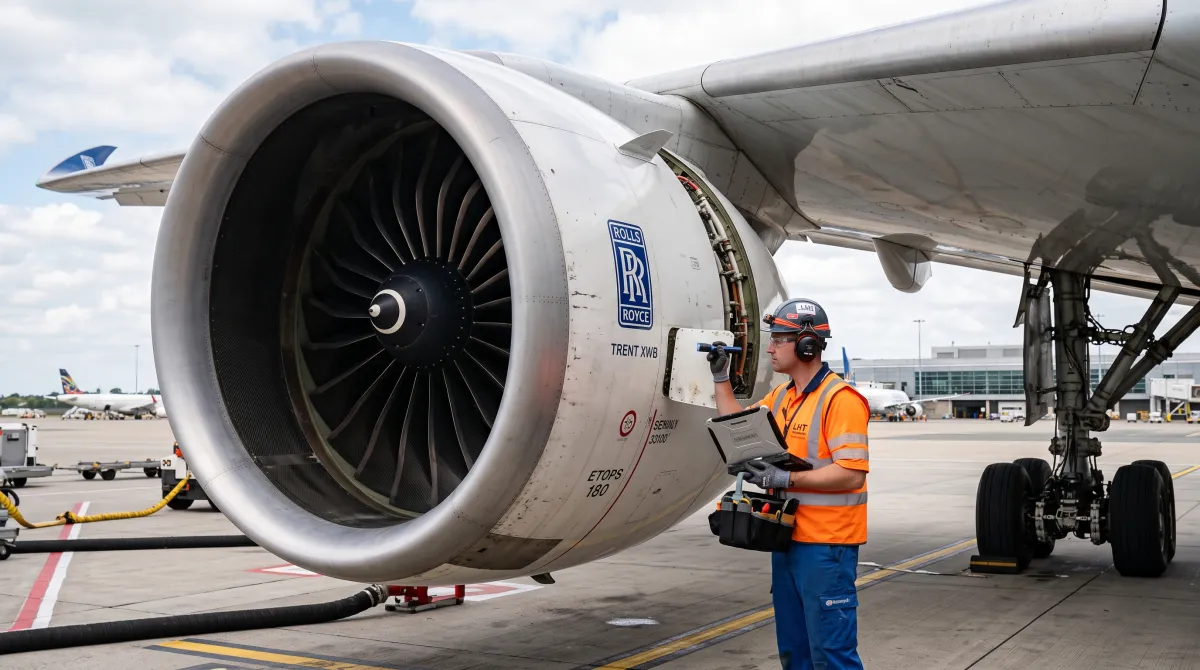
Emirates is the most-watched example. The airline ordered the A350-1000 years before it ever flew one, after a widely reported dispute over Trent engine durability pushed Rolls-Royce's certification timeline back repeatedly.
That delay is itself a small case study in the benefits and risks of innovation. Emirates bet early on new engine technology, then had to rework years of fleet planning when that technology needed more time than promised.
A stretched fuselage is the easy part of building a new aircraft variant. Proving the engine underneath it is what actually delays airlines.
How to Apply Airbus A350 1000
Most travelers do not choose a route because of the aircraft type, but knowing the Airbus A350 1000 basics helps you read a fare, a seat map, or an airline's fleet strategy with sharper eyes.
- Check the aircraft type before booking. Airlines list the operating aircraft at checkout; an A350-1000 usually signals a newer cabin and often a larger premium economy or business section than an older 777.
- Compare seat maps, not just aircraft names. Two airlines flying the same A350-1000 can configure it for roughly 330 seats or well over 400, so the aircraft type alone does not guarantee the same experience.
- Read the route, not just the plane. Airlines assign the A350-1000 to routes where they expect strong premium demand, which is itself a signal about how that airline reads the market on that route.
That routing logic connects to a broader idea in business strategy: airlines increasingly fly long, thin routes point-to-point instead of funneling everyone through a hub. The same tension between direct flights and hub connections shows up in reintermediation, where cut-out middlemen find their way back once a market shifts again.
The Business Story Behind the Jet
The Airbus A350 1000 program is also a live lesson in industrial risk, not just aviation trivia.
Airbus stretched an existing platform instead of building a clean-sheet jet, a classic way to manage the benefits and risks of innovation: lower development cost, but a design ceiling set by decisions made years earlier on the A350-900.
Emirates' years-long wait for its A350-1000 deliveries reads like a lesson in operational planning, too. A fleet plan built around a supplier's promised delivery date can quietly turn into the same trap covered in signs you are being set up to fail at work: commitments made on a timeline nobody in the room fully controls.
The lesson scales down easily. Any team that bets heavily on a vendor's promised timeline, whether it is a jet engine or a software launch, inherits the same kind of risk Emirates absorbed for years.
Airbus A350 1000 FAQ
How many passengers does the Airbus A350 1000 hold?
Airbus lists a typical three-class capacity near 366 seats, though airlines configure the cabin differently, and high-density single-class layouts can carry noticeably more passengers.
What is the range of the Airbus A350 1000?
The A350-1000 flies about 8,400 nautical miles, roughly 15,550 km, fully loaded, slightly less than the standard A350-900 because of its higher weight.
What is the difference between the A350-900 and A350-1000?
The A350-1000 is about 7 meters longer, seats more passengers, and uses the more powerful Trent XWB-97 engine instead of the A350-900's Trent XWB-84.
Which airlines fly the Airbus A350 1000?
Qatar Airways launched the aircraft in 2018, and current operators include British Airways, Cathay Pacific, Etihad Airways, Virgin Atlantic, and Emirates.
Why did Emirates wait so long for its Airbus A350 1000?
A widely reported dispute over Trent XWB engine durability delayed Rolls-Royce's certification work, pushing Emirates' first deliveries back by several years.
Related guides
For the manufacturer's own technical background, see the Airbus A350 overview on Wikipedia, and for the engine, the Rolls-Royce Trent XWB entry.