Business Concepts
Airbus A330 900neo (2026): Specs, Range & Cabin Guide
The Airbus A330 900neo compared to the classic A330-200: real specs on range, engines, cabin seating, and which airlines fly it worldwide in 2026.
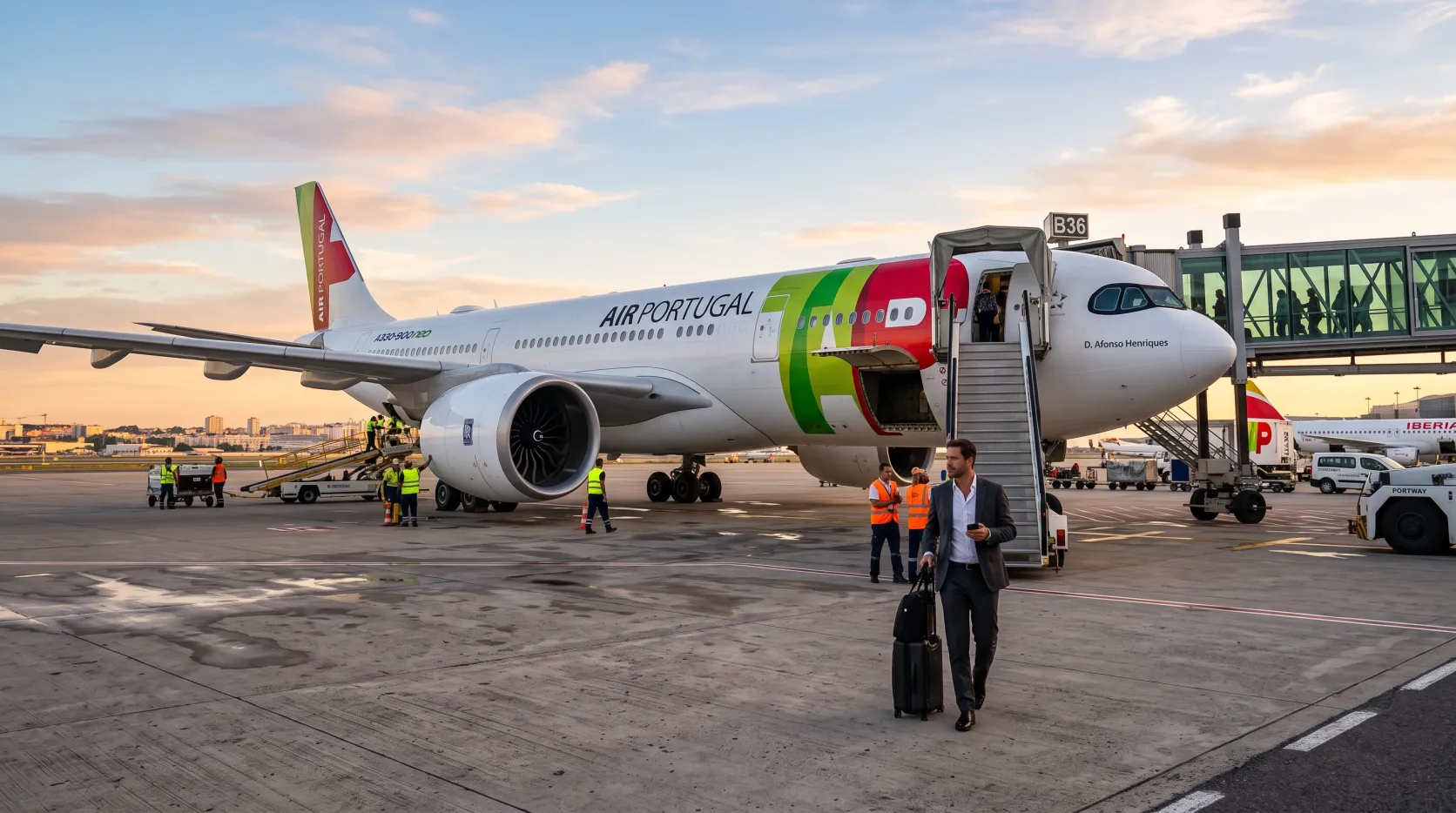
The Airbus A330-900neo, sometimes written Airbus A330 900neo without the hyphen, is the larger, longer-range member of Airbus's re-engined A330neo family. It pairs a new Rolls-Royce Trent 7000 engine with a composite wing borrowed from the A350 program. This guide covers what it actually is, how it compares with the older A330-200, and which airlines fly it.
Quick answer
The Airbus A330-900neo is a widebody, twin-engine long-haul jet in Airbus's re-engined A330neo family, seating roughly 260 to 440 passengers depending on layout. It shares its 63.7-meter fuselage with the classic A330-300, not the shorter A330-200, and flies exclusively on Rolls-Royce Trent 7000 engines.
Key takeaways
- The A330-900neo is the long-fuselage neo variant; the short-fuselage A330-800neo is the true successor to the classic A330-200.
- It uses only the Rolls-Royce Trent 7000 engine, unlike the classic A330's three-engine choice.
- Typical two-class seating runs 260 to 300 passengers; high-density single-class layouts reach around 440.
- Launch operator TAP Air Portugal put the type into commercial service in late 2018.
- Airbus markets roughly 14% lower fuel burn per seat versus the classic A330-300, the core sales pitch for airlines replacing older jets.
What Is the Airbus A330-900neo?
The Airbus A330-900neo is a widebody, twin-aisle airliner, the larger of two aircraft in Airbus's A330neo re-engining program alongside the shorter A330-800neo. It keeps the classic A330's proven airframe but adds new engines, a redesigned wing, and an updated Airspace cabin.
Airbus is the European aerospace manufacturer that also builds the A320 and A350 families. Rolls-Royce, the UK engine maker, supplies the Trent 7000 that powers every A330-900neo built. The program launched in 2014 as an incremental upgrade rather than an all-new aircraft, keeping certification and pilot-training costs down for existing A330 operators.
For readers comparing aircraft economics as a business decision rather than a spotting hobby, this fits into our wider business concepts coverage of how capital equipment choices shape company costs.
Airbus A330-900neo Explained: Engines, Range, and Cabin
Engines and Wing
Every A330-900neo leaves the factory with two Rolls-Royce Trent 7000 turbofans, the first Trent variant built for the A330. Classic A330 customers could choose among three engines: Trent 700, General Electric CF6, and Pratt and Whitney PW4000. The neo drops that choice entirely.
The Trent 7000 shares its core architecture with the Trent 1000 that powers the Boeing 787, which is part of why Rolls-Royce could bring it to market without a clean-sheet design. That shared core also simplifies spare-parts planning for airlines that already operate 787s alongside their A330neo fleet.
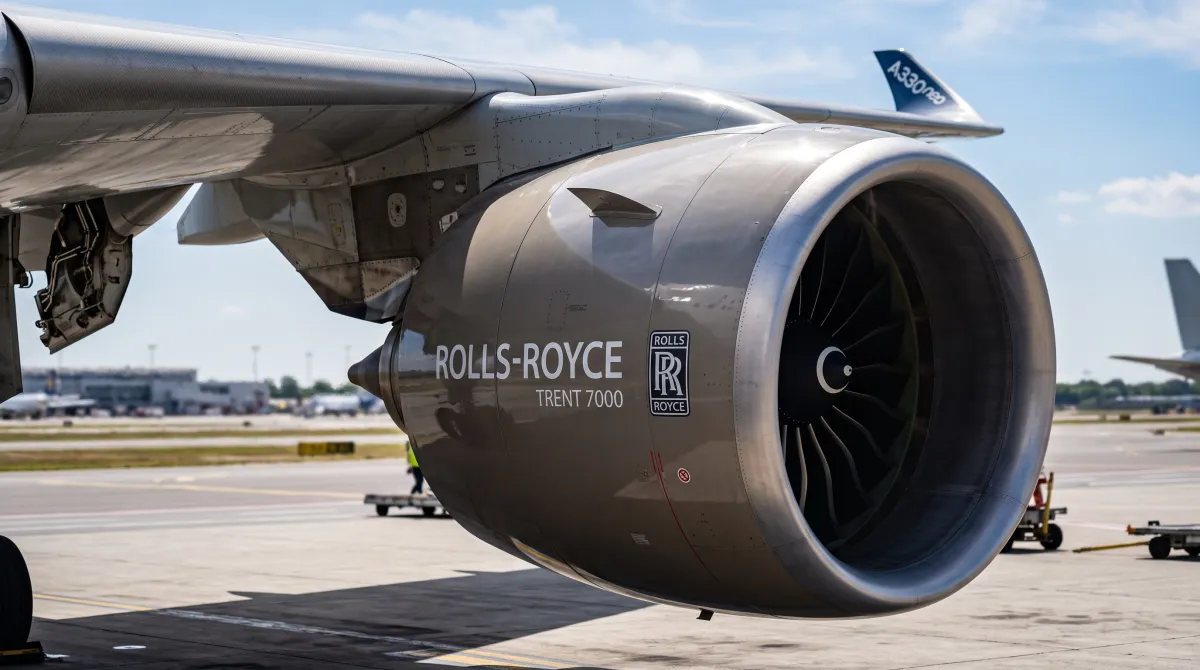
The A330neo wing spans about 64 meters, roughly three meters wider than the classic A330, thanks to new composite wingtips derived from A350 technology. That extra span, paired with the Trent 7000, is what Airbus credits for its claimed 14% lower fuel burn per seat versus the A330-300.
Range
Airbus lists the A330-900's range at approximately 7,200 nautical miles, about 13,334 kilometers, in a typical two-class configuration. That covers most long-haul city pairs without a fuel stop, though it trails the shorter A330-800neo's roughly 8,150 nautical mile range on the same engines and lighter airframe.
In practice, that range comfortably connects hubs like Lisbon or Paris to cities across West Africa, North America, and the Middle East, which is why several of the type's early operators built their long-haul networks around exactly those routes.
Cabin and Seating
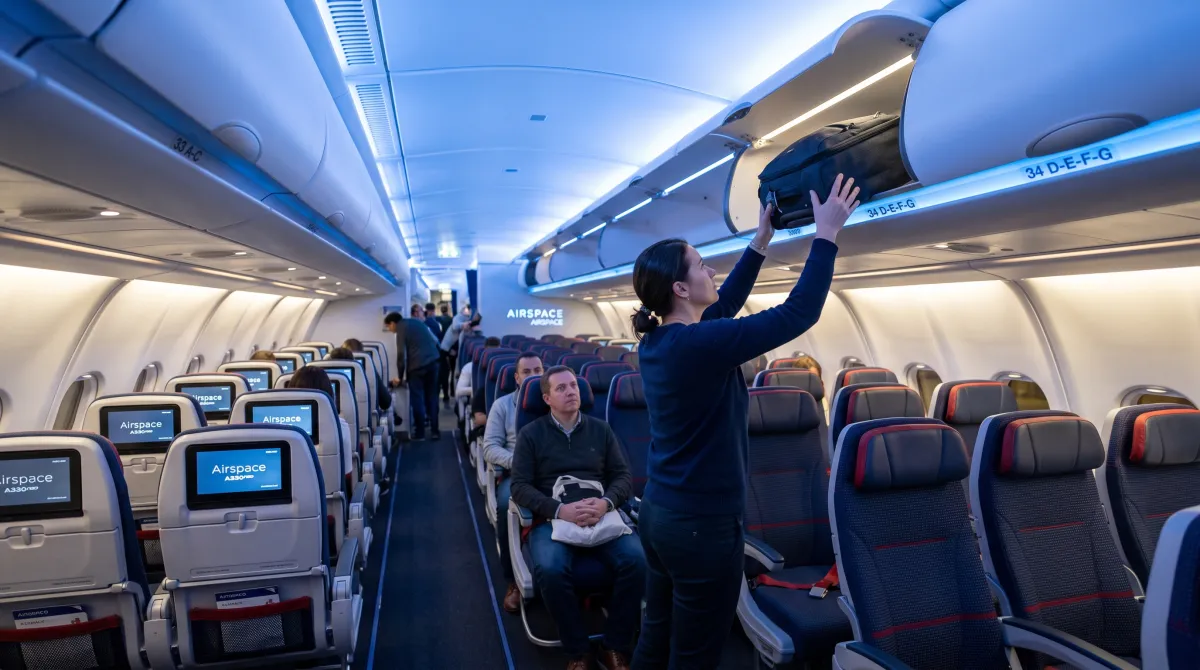
The A330neo Airspace cabin brings larger overhead bins, updated LED mood lighting, and cabin architecture cues borrowed from the A350. Most airlines fit the A330-900neo with 260 to 300 seats across two or three classes, though a high-density single-class charter layout can reach around 440.
The bins hold roughly 60% more bags than those on the classic A330, according to Airbus, which cuts down on gate-checked carry-ons during boarding on full flights.
A330-900neo vs A330-200: The Lineage Confusion
Many buyers searching for the A330-900neo assume it directly replaces the A330-200. It does not. The A330-900neo shares its 63.7-meter fuselage with the larger classic A330-300. The true successor to the shorter A330-200 is the A330-800neo, a jet only a handful of airlines have ordered so far.
| Aircraft | Fuselage length | Typical seats (2-class) | Engines | Approx. range |
|---|---|---|---|---|
| Airbus A330-900neo | 63.7 m | 260-300 | Rolls-Royce Trent 7000 | ~7,200 nmi |
| Airbus A330-200 (classic) | 58.8 m | 230-250 | Trent 700, CF6, or PW4000 | ~7,250 nmi |
| Airbus A330-800neo | 58.8 m | 220-260 | Rolls-Royce Trent 7000 | ~8,150 nmi |
That table is why comparing the A330-900neo and A330-200 head-to-head on range alone misses the point. The A330-200 was built for range on a smaller frame. The A330-900neo was built for a lower cost per seat on a bigger frame, not for outright range.
Airbus A330-900neo Examples: Airlines Flying It Today
TAP Air Portugal became the A330-900neo's launch customer, putting the type into scheduled service on its Lisbon long-haul network in late 2018. Since then, a mix of flag carriers, regional airlines, and leisure operators have added it to replace older classic A330s and aging 767s.
- TAP Air Portugal, the launch operator, on transatlantic and African routes
- Delta Air Lines, on long-haul U.S. routes to Europe and beyond
- AirCalin, connecting Noumea to Asia and Australia
- Air Senegal, on West Africa to Europe and North America routes
Airbus had logged more than 700 combined A330neo orders and commitments by 2024, according to the manufacturer's published order book, a sign the re-engined family has held its own against newer twin-aisle rivals. Airline fleets change, though, so before booking specifically for the newer cabin, check the operating carrier's live fleet page or a flight-tracking site, since aircraft swaps on a given route are common.
The A330-900neo was never meant to out-range anything. It was built to make the same route cheaper to fly.
How to Apply A330-900neo Specs When Booking or Comparing Flights
Knowing the aircraft type before you book tells you more than an airline's marketing page does. A330-900neo flights typically mean the newer Airspace cabin, larger overhead bins, updated mood lighting, and, in most economy layouts, a 2-4-2 seating pattern.
Corporate travel buyers and procurement teams benefit from the same logic. Airlines flying newer, more fuel-efficient jets like the A330-900neo tend to run lower per-seat costs on a route, which can translate into more stable pricing over a multi-year travel agreement.
Booking those routes directly with the airline versus through a fare aggregator is itself a small example of reintermediation, where digital platforms reinsert intermediaries into a market that once ran through travel agents alone, a dynamic covered in more depth in our guide to reintermediation.
The neo program is itself a useful case study in how companies weigh incremental upgrades against a clean-sheet design, a trade-off covered in more depth in our guide to the benefits and risks of innovation.
To check which aircraft a specific flight uses, look at the fare details page during booking rather than the airline's homepage photos. Most airlines display the exact assigned aircraft type once a schedule is inside roughly 90 days of departure.
Airbus A330-900neo: FAQ
What is the difference between the Airbus A330-900neo and the A330-200?
The A330-900neo is a newer, re-engined jet with a longer 63.7-meter fuselage, while the A330-200 is the older classic model with a shorter 58.8-meter fuselage and a choice of three engine types. The A330-800neo, not the -900, is the A330-200's direct successor.
How many passengers does the Airbus A330-900neo hold?
Most airlines configure the A330-900neo for 260 to 300 passengers across two or three classes, though a single-class high-density layout can hold around 440.
Which airlines fly the Airbus A330-900neo?
Launch operator TAP Air Portugal, along with Delta Air Lines, AirCalin, and Air Senegal, are among the carriers flying the A330-900neo on long-haul routes.
What engines power the Airbus A330-900neo?
Every A330-900neo uses two Rolls-Royce Trent 7000 turbofans. Unlike the classic A330, Airbus offers no alternative engine choice on the neo.
What is the range of the Airbus A330-900neo?
Airbus lists the A330-900neo's range at approximately 7,200 nautical miles, about 13,334 kilometers, in a typical two-class configuration.